X-ray fluorescence (XRF) is the emission of characteristic “secondary” (or fluorescent) X-rays from a material that has been bombarded by high-energy X-rays or gamma rays. The phenomenon is widely used for elemental and chemical analysis, particularly in the investigation of metals, glass, ceramics and building materials, and for research in geochemistry, forensic science, archaeology and art objects such as paintings and murals.


It has become standard practice to analyze art and archaeological objects in the field and in museum collections with advanced atomic spectrometry methods. XRF is a technique widely used to measure secondary X-rays emitted by materials that have been bombarded by gamma rays.
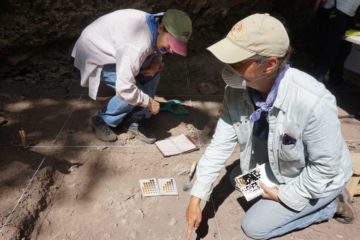
The handheld X-Ray fluorescent (XRF) analyzers are favored by research groups worldwide for testing cultural objects precisely because of their portability, non-destructive, and non-invasive nature, which has resulted in a vast literature documenting experimental methods for almost any material both in situ collections at museums and in archaeological excavations and surveys.