Sociopolitical complexity developed in Mesoamerica beginning in the initial Early Formative period (1700-1200 BC) with the transition from egalitarian communities to ranked societies, although there are also disagreements as to causes, processes, place, and timing of the archaeological correlates associated to this emergence.
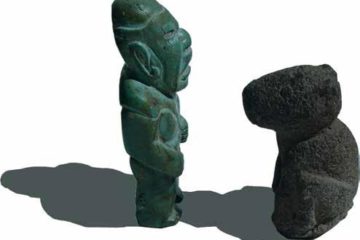
The emergence, geographic spread, timing, meaning and influence of the Gulf Coast Olmec in other regions of Mesoamerica is a distinct research question scholars deem relevant, but again there exists little agreement about how to interpret it. Stark sees the Early Formative era as a period of more “open” societies where trade, feasting, and marriage alliances were ways for leaders to distinguish themselves, and she describes a heterogeneous landscape of communities exhibiting varying degrees of the expected Neolithic suite of traits. Olmec imagery in the Gulf Coast and elsewhere emphasized the powers of rulership, corn imagery predominated, and portable jade objects were common. Along with this new materialization of ideology there was an explosion of large ceremonial centers in many parts of Mesoamerica perhaps fueled by larger populations supported by more productive maize.