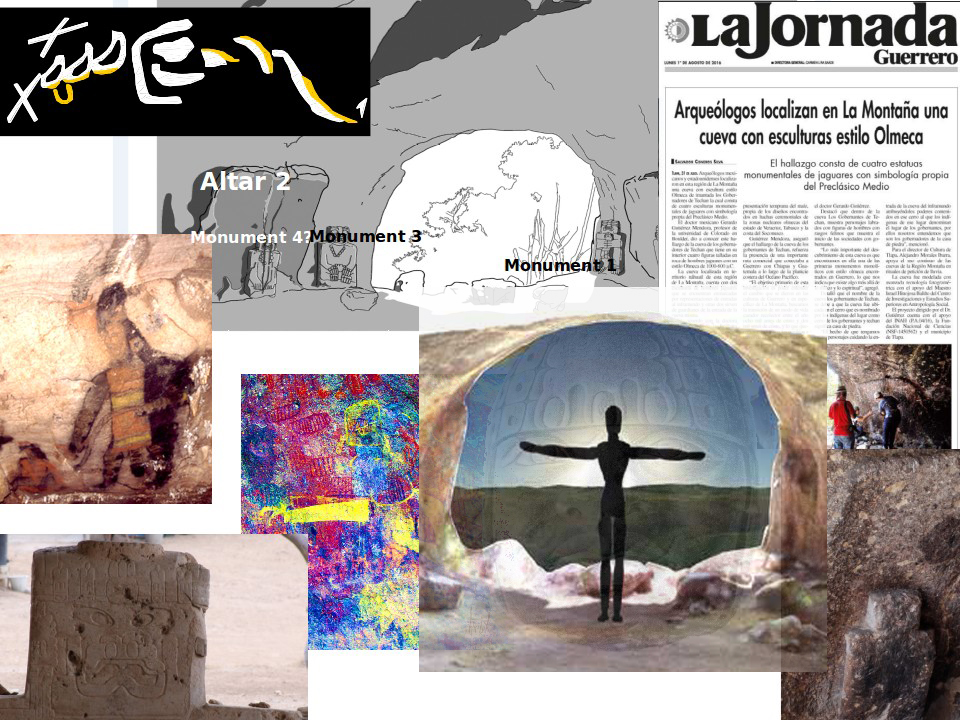
Society for American Archaeology, 83RD ANNUAL MEETING, April 11–April 15, Washington, DC. SYMPOSIUM: PERFORMING IN THE SHADOWS: RITUAL PRODUCTION IN CAVES AND ROCKSHELTERS. Chairs: Holley Moyes and Kelsey Hanson
Gerardo Gutiérrez, Mary E. Pye & Alejandro Morales Ibarra (2018) “Were-Jaguars, Birdmen, and Community Performance in the Rain Petition Ceremonies in the Caves of the Upper Balsas River, Eastern Guerrero, Mexico.”
Abstract: In this paper, we address the role of leaders and their communities during the performance of ceremonies associated with rain petition in a network of caves located in the Mixtec-Tlapanec-Nahua region of Eastern Guerrero. We present newly discovered archaeological evidence in the caves of Pozo de Muerto, Casa de la Lluvia, Cauadzidziqui, Juxtlahuaca and Gobernadores de Techan, as well as ethnographic analogy to shed new light on the use of caves as arenas of ritual and political performance from the Archaic to the Postclassic periods.
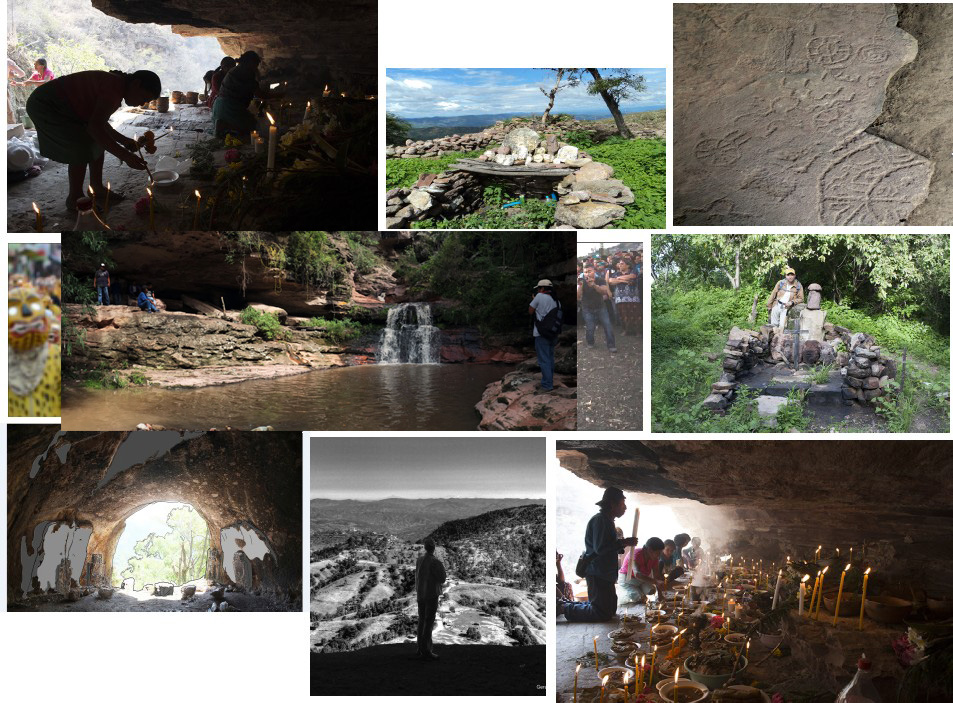
Society For American Archaeology, March 29–April 2, 2017 Vancouver, BC, Canada. SYMPOSIUM: PAINTING AND CARVING THE UNDERWORLD: THE ARCHAEOLOGY OF GUERRERO THROUGH ITS CAVES. Chair: Gerardo Gutiérrez
Symposium abstract: Previous survey by Gutierrez in the area had revealed numerous sites, but the past field season (summer 2016) of the PIPOG (Proyecto Interdisciplinario de la Prehistoria del Oriente de Guerrero) was the first reconnaissance focused on caves and rockshelters in the municipalities of Tlapa and Copanatoyac. In eastern Guerrero, cave sites have been used by humans since Paleoindian times to the present-day rain-petition rituals centered on the feast of San Marcos. This session reviews the preliminary findings of the PIPOG in a series of caves, including photogrammetric studies, pXRF elemental analysis of murals, and excavation.
Mary E. Pye And Gerardo Gutiérrez (2017) “Ritual Landscapes And Cave Networks Of Eastern Guerrero, Mexico.”
Abstract: This paper presents an overview of the findings from the Formative period caves of Cauadzidziqui (pre-Olmec and Olmec-style paintings), Techan or Cave of the Governors (Olmec style monuments carved into the walls), and Ocotequila (Middle Formative painting), as well as Chiepetlan (Paleoindian, Late Postclassic-Early Colonial) and Cueva de las Lluvias (Classic period floor carvings). Also assessed is the importance of the locations chosen for Formative period caves in the sacred landscape of the region and the relationships to communication routes.
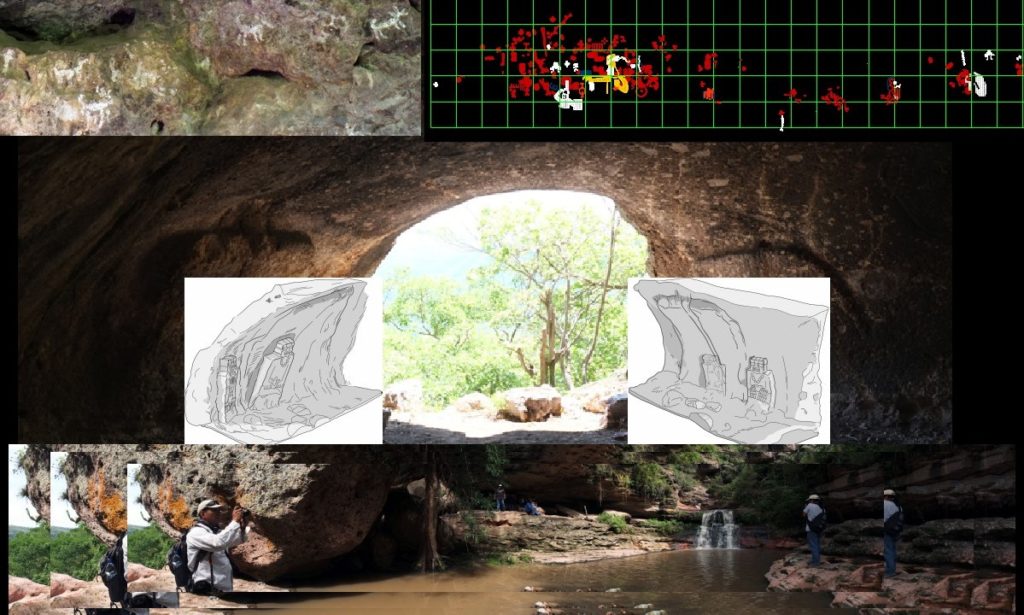
Israel Hinojosa-Balino and Gerardo Gutiérrez (2017) “Applications of Photogrammetry in Understanding Spatial and Ritual Contexts of Caves in the La Montaña Region, Eastern Guerrero”
Abstract: Mapping caves has always been a daunting task, given the complexity of its forms and the usually difficult access for surveyors and their equipment. 3D modeling of the exterior and interior of some caves is now possible using photogrammetry. Here, we present how we captured the complexity of the Mesoamerican underworld using both drones and digital photography in the caves of Guerrero.
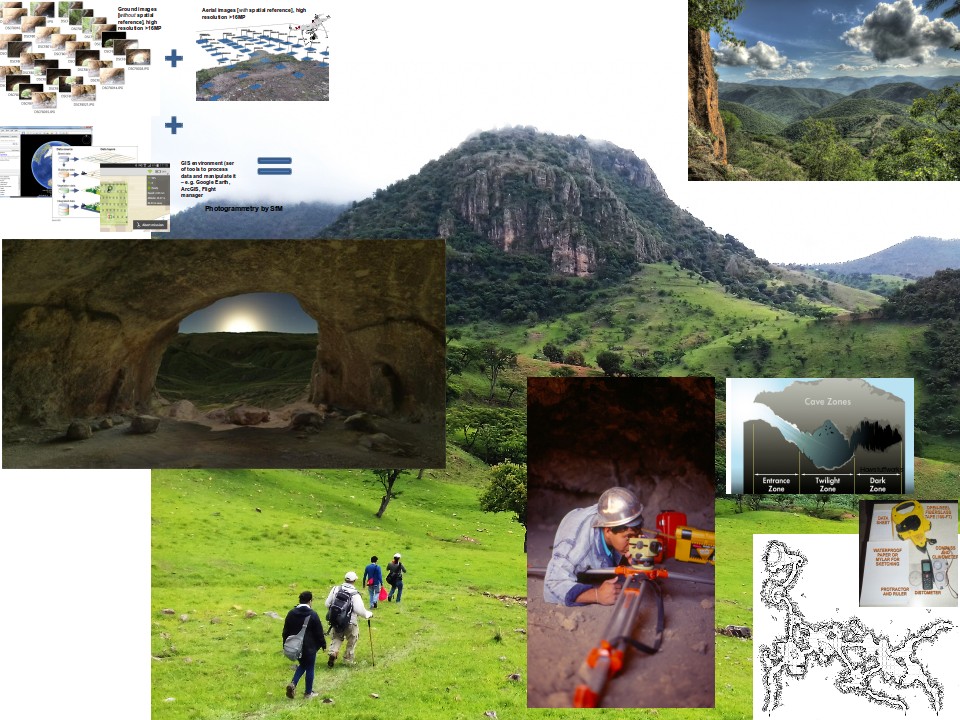
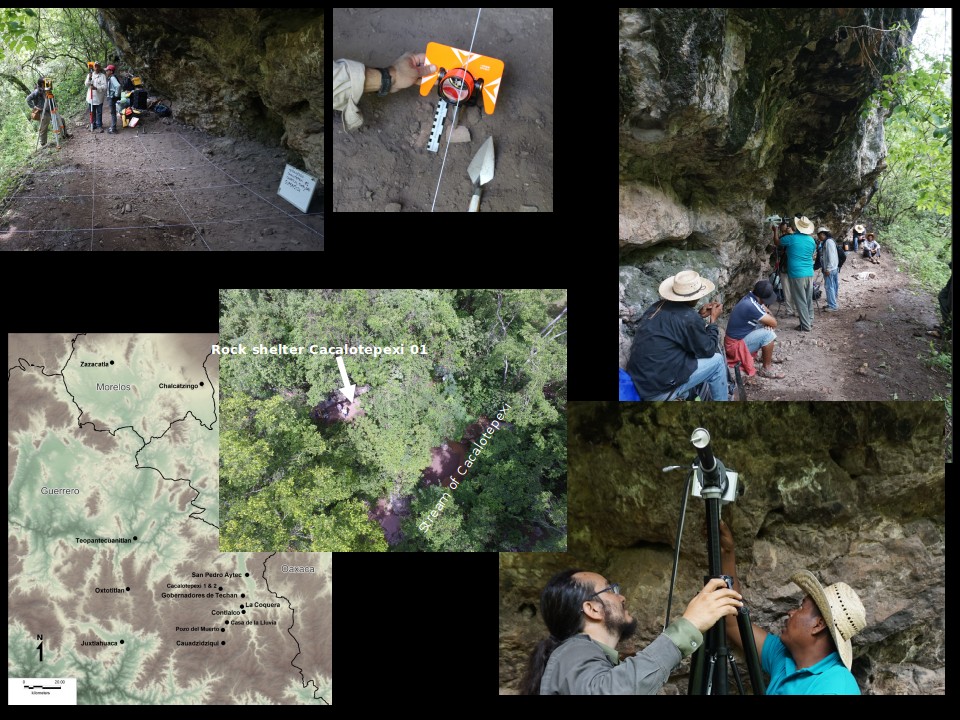
Alejandro Morales, Gerardo Gutiérrez, Michelle Goman, Israel Hinojosa-Balino and Mary E. Pye (2017) “Excavations in Cacalotepexi Cave, Chiepetlan: Paleoindian Enigma and Late Postclassic–Early Colonial Transition”
Abstract: Cacalopetepexi Cave, located near the town of Chiepetlan, is notable for its depictions of what appear to be deer being chased by humans done in white paint. Excavations in the cave uncovered evidence of use in the Late Postclassic-Early Colonial periods. An unexpected find at the back of the cave was an enigmatic deposit of calcium carbonate filled with chert debitage and animal bones, which returned radiocarbon dates around 9800 cal BC.
Mariana Sanders, Gerardo Gutiérrez and James Córdova (2017) “Examination of Mural Pigments with Portable XRF in the Caves of Eastern Guerrero with Comparisons to Local Colonial Lienzos and Documents”
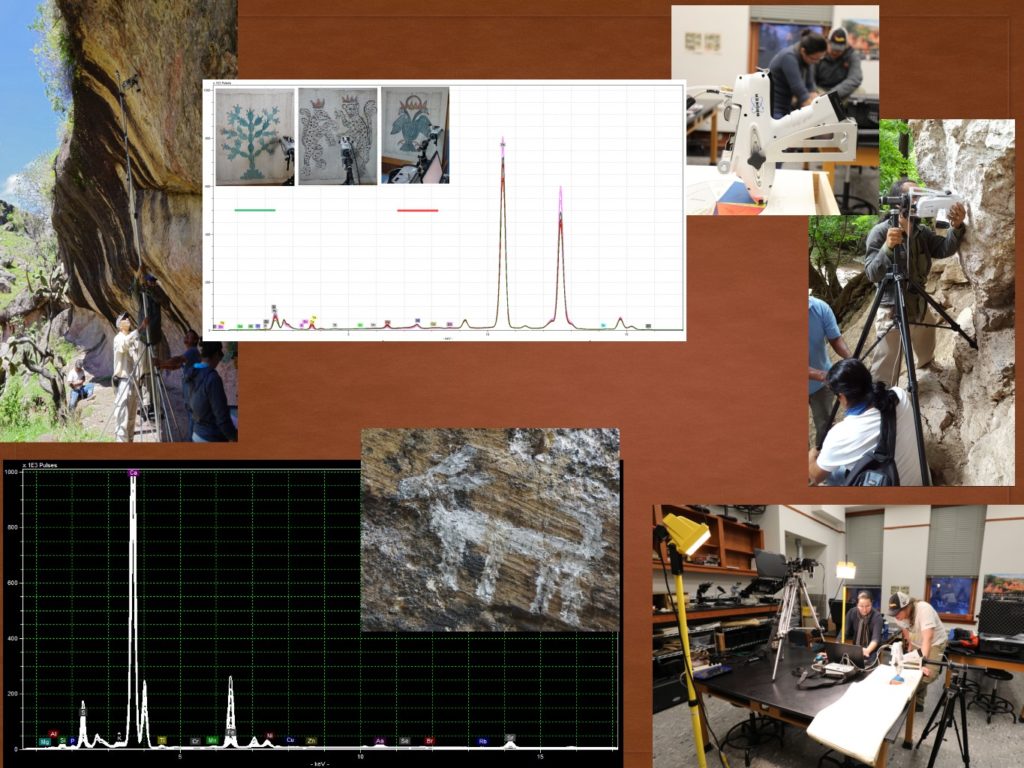
Abstract: Rock art is now recognized as a key component of cultural expression in prehistory and a variety of new techniques have been developed to offer more insight into this area of archaeological expression. Here, we present our findings from the use of portable X-ray fluorescence (pXRF) analysis at cave sites in the state of Guerrero, Mexico. The authors offer a scientific basis for deriving inference regarding the process of rock art creation in several caves located in eastern Guerrero through the analysis of their pigments.
Gerardo Gutiérrez, James Córdova and Mary E. Pye (2017) “Who Are the Olmec in Eastern Guerrero? From Grafitti to Monuments in the Caves of Guerrero”
Abstract: The caves of Cauadzidziqui and Techan offer contrasting views of how Olmec style appears in eastern Guerrero. Cauadzidziqui presents large-scale paintings of individuals with Olmec style symbols and objects plastered over what is believed to be local late Archaic paintings—essentially graffiti placed in a sacred locale along a primary route between the highlands and coast. The Cave of the Governors presents three or possibly four jaguar sculptures carved out of living rock, flanking the interior opening to the cave. The cave opening offers a view of the rising sun on the summer solstice highlighting the cave’s importance as conduit to the underworld and water mountain. Surrounding the cave opening were smaller niches recalling the cerro of Chalcatzingo and the origin of Chicomoztoc. This paper explores the significance of the iconography of these caves in eastern Guerrero and its relationship to broader Formative period iconography in Mesoamerica.